
Best Aquarium Water Conditioners (2026): Doses and Claims Compared
The best aquarium water conditioners compared on dose per gallon, chlorine and chloramine removal, ammonia binding claims and cost, from each maker's own label.
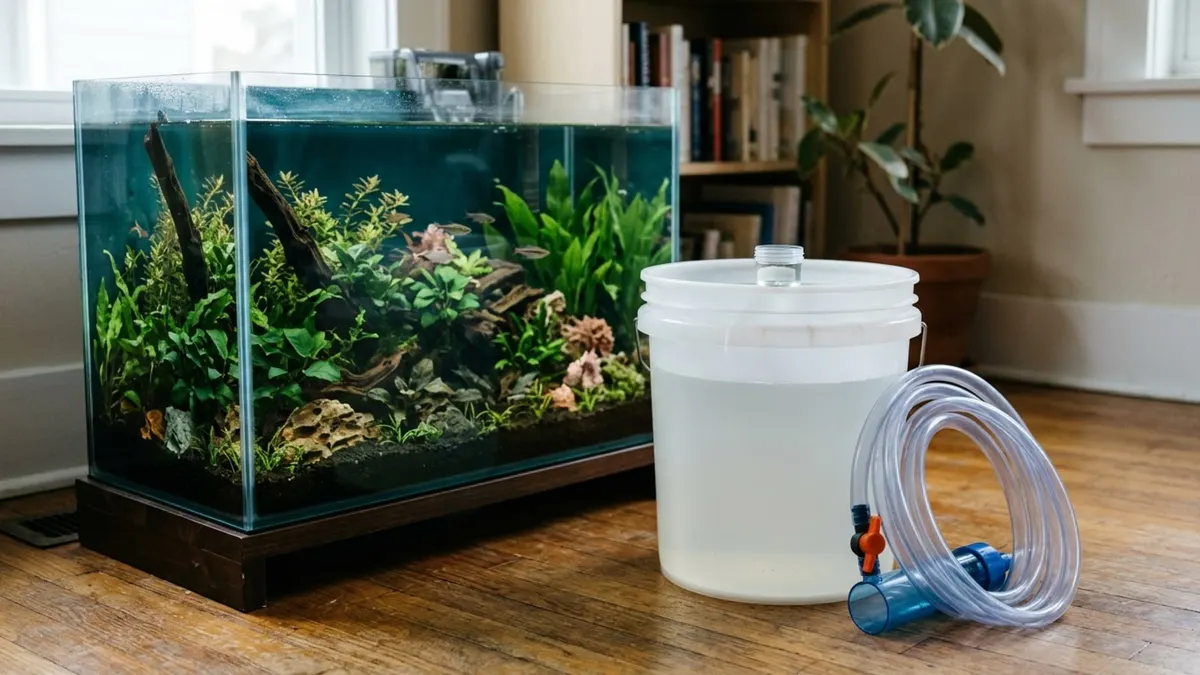
Affiliate disclosure: product links on this page go to Amazon or to the maker's own store. As an Amazon Associate we earn from qualifying purchases, at no extra cost to you; links to makers' stores earn us nothing. No retailer or brand sees our picks before they are published or has any say in them. How we choose.
Seachem Prime is the water conditioner we would buy. One 5 mL capful treats 50 US gallons of new water, so a bottle lasts a long time; Seachem says it removes chlorine and chloramine; and it is unusually honest about its ammonia claim, stating that it binds ammonia, nitrite and nitrate for up to 48 hours but does not remove them from the tank. It works in fresh and salt water.
Every tap-water tank needs a conditioner, because US water utilities disinfect drinking water with chlorine or chloramine (the EPA explains why), and those are meant to kill bacteria. Here are the best, with each maker's dose read from its own label.
Our top picks at a glance
1. Best overall
Seachem Prime, 500 mLDose: 5 mL per 50 US gal (Seachem) · Chloramine: Yes, per Seachem · Ammonia claim: Binds ammonia, nitrite, nitrate up to 48 h; does not remove them · Water: Fresh and salt
2. Best Prime alternative
Fritz Complete Water Conditioner, 16 ozDose: 5 mL per 50 gal, about 2 drops per gal (per the listing) · Chloramine: Yes (per the listing) · Ammonia claim: Binds ammonia and nitrite, still available to bacteria · Water: Fresh, salt and ponds
3. Best for new or stressed fish
API Stress Coat, 16 ozDose: 5 mL per 10 gal; double for slime coat (API) · Chloramine: Yes, per API · Ammonia claim: None stated · Water: Fresh; salt only without a protein skimmer (API)
4. Best for simple dosing
Tetra AquaSafe Plus, 16.9 ozDose: 1 tsp (5 mL) per 10 gal (Tetra) · Chloramine: Yes, per Tetra · Ammonia claim: None stated · Water: Fresh and marine (Tetra)
| Pick | Dose | Chloramine | Ammonia claim | Water | Buy |
|---|---|---|---|---|---|
| Seachem Prime, 500 mLBest overall | 5 mL per 50 US gal (Seachem) | Yes, per Seachem | Binds ammonia, nitrite, nitrate up to 48 h; does not remove them | Fresh and salt | Amazon |
| Fritz Complete Water Conditioner, 16 ozBest Prime alternative | 5 mL per 50 gal, about 2 drops per gal (per the listing) | Yes (per the listing) | Binds ammonia and nitrite, still available to bacteria | Fresh, salt and ponds | Amazon |
| API Stress Coat, 16 ozBest for new or stressed fish | 5 mL per 10 gal; double for slime coat (API) | Yes, per API | None stated | Fresh; salt only without a protein skimmer (API) | Amazon |
| Tetra AquaSafe Plus, 16.9 ozBest for simple dosing | 1 tsp (5 mL) per 10 gal (Tetra) | Yes, per Tetra | None stated | Fresh and marine (Tetra) | Amazon |
Best overall
Seachem Prime, 500 mL
Highly concentrated, handles chloramine, and Seachem spells out exactly what its ammonia binding does.
- Dose
- 5 mL per 50 US gal (Seachem)
- Chloramine
- Yes, per Seachem
- Ammonia claim
- Binds ammonia, nitrite, nitrate up to 48 h; does not remove them
- Water
- Fresh and salt
Pros
- 5 mL per 50 gallons makes it very cheap per water change
- Seachem allows up to 5 times the normal dose for nitrite emergencies
- Non-acidic; Seachem says it will not affect pH
- Sold by Amazon.com
Cons
- Seachem says Nessler-type ammonia kits read it as off-scale; use a salicylate test
- The concentrated dose is easy to overdo with a big cap; each cap thread is about 1 mL
Seachem's page states Prime removes chlorine and chloramine and binds ammonia, nitrite and nitrate so they are non-toxic, for up to 48 hours, while leaving them available to the biofilter. It is careful to add that Prime does not remove those compounds from the tank, and that it can be redosed every 24 to 48 hours (every 24 if levels are rising). The dose is one 5 mL capful per 50 US gallons (200 liters) of new water; Seachem says each cap thread is about 1 mL for smaller volumes, its directions allow a double dose for exceptionally high chloramine, and up to five times the normal dose may be used for nitrite.
Seachem also warns that if the water is above 86°F and chlorine or ammonia is low, a half dose should be used. One caution for testing: Seachem says Nessler-based ammonia kits will not read correctly with Prime; salicylate kits such as API's work if read promptly.
Seachem's FAQ fills in the rest. The five-times emergency dose is for ammonia or nitrite above 2 ppm; a sulfur smell is normal; and Prime stored properly lasts indefinitely, so a big bottle is no waste. Seachem sells it in seven sizes from 50 mL to 4 liters, and the 500 mL bottle holds 100 full doses, enough for 5,000 gallons of new water.
Best Prime alternative
Fritz Complete Water Conditioner, 16 oz
The same concentration as Prime, with ammonia and nitrite binding and a clear emergency dose, from a US employee-owned maker.
- Dose
- 5 mL per 50 gal, about 2 drops per gal (per the listing)
- Chloramine
- Yes (per the listing)
- Ammonia claim
- Binds ammonia and nitrite, still available to bacteria
- Water
- Fresh, salt and ponds
Pros
- Same 5 mL per 50 gallon concentration as Prime
- Can be repeated up to 5 times in 24 hours for high ammonia or nitrite (per the listing)
- May be added directly to the aquarium
Cons
- Sold by a third-party seller
- Listing reminds you to keep circulation and aeration up with any conditioner
Fritz Complete's listing says it neutralizes chlorine, chloramines and heavy metals, binds ammonia and nitrite so they are harmless to fish while staying available to nitrifying bacteria, and doses at one teaspoon (5 mL) per 50 gallons, about 2 drops per gallon. For very high ammonia or nitrite, it says the dose can be repeated up to five times in 24 hours, with good circulation and aeration.
It is effectively interchangeable with Prime for most keepers. Pick whichever is in stock.
Best for new or stressed fish
API Stress Coat, 16 oz
A conditioner with aloe vera that API says replaces the protective slime coat, for new arrivals and nipped fins.
- Dose
- 5 mL per 10 gal; double for slime coat (API)
- Chloramine
- Yes, per API
- Ammonia claim
- None stated
- Water
- Fresh; salt only without a protein skimmer (API)
Pros
- Aloe vera extract, which API says replaces the slime coat damaged by handling or fighting
- Use when adding new fish or when fish are injured
- Sold by Amazon.com
Cons
- 5 times less concentrated than Prime, so it costs more per gallon
- No ammonia binding claim
API says Stress Coat removes chlorine and chloramines from tap water and neutralizes heavy metals, and uses aloe vera extract to replace the protective slime coat damaged by handling, shipping or fighting. The dose is 5 mL per 10 gallons, doubled to repair slime coat and damaged fins.
API's FAQ adds two details. Dose for the new water only when you are dechlorinating, but for the whole tank when you are helping an injured fish recover. And while it works in salt water, API does not recommend it in a marine tank that runs a protein skimmer.
Use it when moving fish or after a fight. For routine water changes on big tanks, Prime or Fritz is far cheaper per gallon.
Best for simple dosing
Tetra AquaSafe Plus, 16.9 oz
An easy teaspoon dose from Tetra, sold by Amazon, for small fresh or saltwater tanks.
- Dose
- 1 tsp (5 mL) per 10 gal (Tetra)
- Chloramine
- Yes, per Tetra
- Ammonia claim
- None stated
- Water
- Fresh and marine (Tetra)
Pros
- Simple teaspoon measure
- Tetra says it works in seconds
- Sold by Amazon.com
Cons
- No ammonia binding claim
- Five times Prime's dose per gallon, so a bottle treats less water
Tetra says AquaSafe Plus works in seconds to neutralize chlorine, chloramines and heavy metals in tap water. Its directions are one teaspoon (5 mL) per 10 gallons, and the cap doubles as the measure: fill it to the inner ring for 10 gallons, or use a full capful for 20. That is five times Prime's dose by volume.
Tetra also says its BioExtract formula carries seaweed extracts meant to support filter bacteria, and that it suits fresh and marine tanks. It makes no ammonia binding claim, so for a tank fighting an ammonia problem, Prime or Fritz is the better tool.
Why tap water needs a conditioner
The EPA explains that public water systems use chlorine as a primary disinfectant, and many switched to chloramines (chlorine combined with ammonia) for longer-lasting disinfection in their pipes. Both are there to kill bacteria. In an aquarium they also harm fish gills and the filter's nitrifying bacteria. A conditioner neutralizes them before the water goes in.
Chloramine is the trap. The EPA describes it as forming when ammonia is mixed into chlorine and says utilities choose it because it lasts longer in the pipes, so letting a bucket stand is no fix. Because chloramine carries ammonia with it, a conditioner that names chloramine and also binds ammonia covers both halves. Your utility's annual water quality report says which disinfectant it uses.
How little chlorine it takes to harm fish
Tap water chlorine harms fish at levels far below what drinking water may legally carry. Merck's veterinary manual reports adverse effects at chlorine concentrations as low as 0.02 mg/L and deaths at 0.04 mg/L. The EPA allows public water up to 4.0 mg/L of chlorine or chloramine (its maximum residual disinfectant level), a hundred times the level Merck links to fish deaths. So every gallon of tap water needs treating, top-offs included.
Merck also warns that utilities sometimes push extra chlorine or chloramine through the lines during maintenance, and that miscalculating the volume of water you are treating can make a conditioner fail. Dose for the real number of gallons, not a guess.
Doses side by side
| Conditioner | Dose (maker) | Per 10 gallons | Names chloramine | Binds ammonia |
|---|---|---|---|---|
| Seachem Prime | 5 mL per 50 gal | 1 mL | Yes | Yes, up to 48 h |
| Fritz Complete | 5 mL per 50 gal | 1 mL | Yes | Yes |
| API Stress Coat | 5 mL per 10 gal | 5 mL | Yes (API) | Not claimed |
| Tetra AquaSafe Plus | 1 tsp (5 mL) per 10 gal | 5 mL | Yes (Tetra) | Not claimed |
How far one bottle goes
Water conditioner cost comes down to concentration. Working from each maker's label dose and the bottle size we link:
| Conditioner | Bottle | Label dose | New water treated |
|---|---|---|---|
| Seachem Prime | 500 mL | 5 mL per 50 gal | 5,000 gal |
| Fritz Complete | 16 fl oz (473 mL) | 5 mL per 50 gal (per the listing) | 4,730 gal |
| Tetra AquaSafe Plus | 16.9 fl oz (500 mL) | 5 mL per 10 gal | 1,000 gal |
| API Stress Coat | 16 fl oz (473 mL) | 5 mL per 10 gal | 946 gal |
For a 20 gallon tank getting a 25 percent change each week (5 gallons), that is 1,000 water changes from the Prime bottle and 189 from the Stress Coat bottle.
How we chose
- Chloramine handled, named on the label.
- Honest claims. Seachem says plainly that Prime binds rather than removes ammonia. We prefer that to vague "detoxifies" wording.
- Concentration and cost per gallon.
- Fresh and salt water where the maker says so.
How to use a conditioner
- Work out the volume of new water, not the whole tank (unless the label says otherwise).
- Add the dose to the bucket or, with a hose-based changer like the Python, dose the whole tank volume as you refill.
- Match the new water's temperature to the tank with a thermometer.
- In an emergency (ammonia or nitrite above zero), follow the label's emergency dose and keep aeration strong.
Checking that the chlorine is gone
A water conditioner works only if the dose matches the water. Merck's veterinary manual recommends testing both free and total chlorine, because chloramine-treated water can show no free chlorine while still carrying a high total chlorine level. Tetra's EasyStrips 6-in-1 has a total chlorine pad, which Tetra defines as free chlorine and chloramine combined, so one strip dipped in treated tap water checks the dose. Our test kit guide compares it with liquid kits.
Chloramine matters most in a new tank. Merck explains that removing the chlorine half of chloramine frees its ammonia: a mature biofilter absorbs that, but a new or damaged one cannot keep up across repeated water changes. Its fix is a dechlorinator that also binds the ammonia, which is why Prime and Fritz top this list.
Conditioner is not a cure
Binding ammonia buys time; it does not fix the cause. University of Florida extension scientists describe water changes and ammonia binders as short-term solutions and a working biofilter as the long-term one. If you keep needing emergency doses, the tank is overstocked, overfed or not cycled. Read how to cycle a fish tank and check your water with a test kit. For reef tanks mixed from RO water, conditioner is not needed for the RO water itself.
Frequently asked questions
What is the best water conditioner for aquariums?
Seachem Prime. One 5 mL capful treats 50 gallons, Seachem says it removes chlorine and chloramine, and it binds ammonia, nitrite and nitrate for up to 48 hours. Fritz Complete is an equally concentrated alternative.
How much Seachem Prime do I use?
Seachem's dose is 5 mL per 50 US gallons of new water, with each cap thread about 1 mL for smaller volumes. Seachem's directions allow a double dose for high chloramine and up to five times the dose in nitrite emergencies.
Does water conditioner remove ammonia?
Not permanently. Seachem says Prime binds ammonia so it is non-toxic for up to 48 hours but does not remove it from the system. The filter's bacteria or a water change must deal with it.
Can I let tap water sit instead of using conditioner?
Not if your utility uses chloramine, which lasts longer than chlorine. The EPA notes many systems use chloramines for longer-lasting disinfection. Use a conditioner that names chloramine.
Do I need water conditioner for every water change?
Yes, whenever you add tap water. Treat the new water before or as it goes in. RO or distilled water does not contain chlorine or chloramine.
Can you overdose water conditioner?
Within the label's limits, no harm is expected: Seachem's directions allow a double dose of Prime for high chloramine and up to five times the dose for nitrite. Keep aeration strong, and use a half dose of Prime above 86°F when chlorine or ammonia is low, as Seachem advises.
Sources
- Prime, Seachem
- Chloramines in Drinking Water, US EPA
- FA16 Ammonia in Aquatic Systems (Francis-Floyd, Watson, Petty and Pouder), University of Florida IFAS Extension
- Environmental Diseases of Aquatic Animals in Aquatic Systems (Francis-Floyd, Yanong and Petty), Merck Veterinary Manual
- National Primary Drinking Water Regulations, US EPA
- API STRESS COAT Aquarium Water Conditioner, API (Mars Fishcare)
- AquaSafe Plus, Tetra
- EasyStrips 6-in-1 Aquarium Test Strips, Tetra
Cover image: Illustration: Aquarium Gear Review (AI-generated)
Related guides
API Freshwater Master Test Kit Review: Every Test, Step by Step
The API Freshwater Master Test Kit is still the kit to beat for freshwater tanks. Here is what each of its five tests measures, how to run them correctly, and its limits.
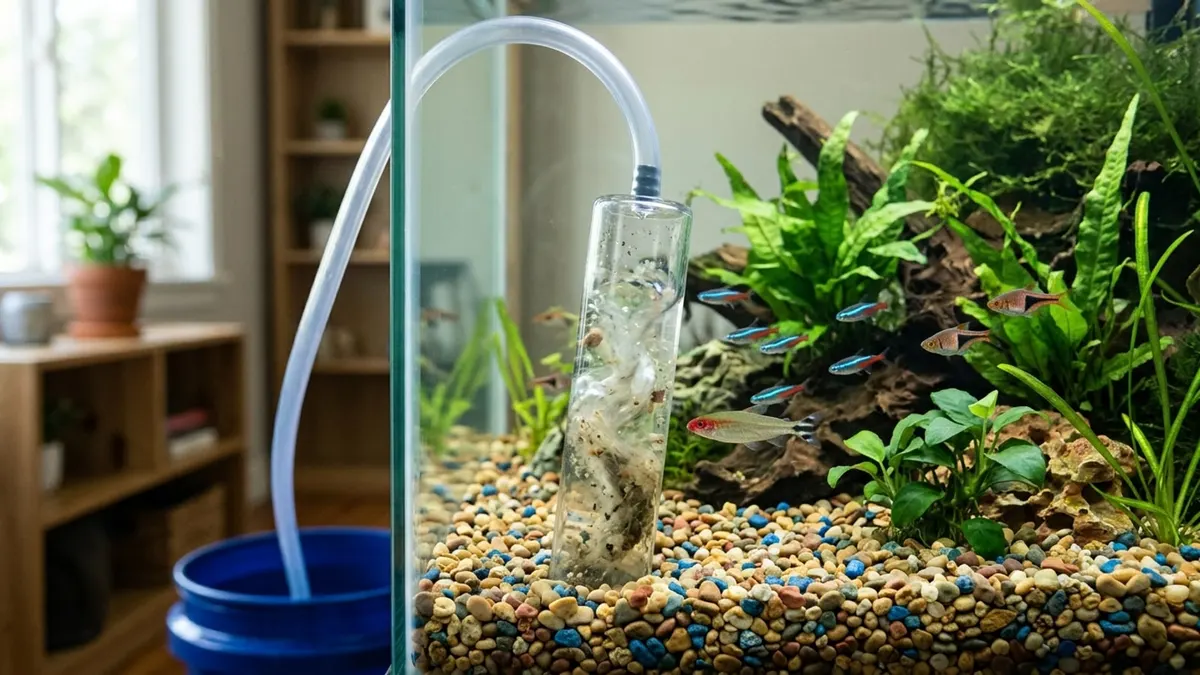
Best Aquarium Gravel Vacuums and Water Changers (2026)
For tanks of 20 gallons and up, the Python No Spill Clean and Fill ends bucket carrying. For smaller tanks, Aqueon's bulb siphon is all you need. Here are both and an electric option.
Best Aquarium Water Test Kits (2026): Liquid Kits vs Strips
API's Freshwater Master Test Kit is the one we would buy: ammonia, nitrite, nitrate and two pH ranges, over 800 tests. Here is when strips are enough and what reef tanks need.