
Best Aquarium Wavemakers and Powerheads for Reef Tanks (2026)
The best aquarium wavemakers and circulation pumps for reef and freshwater tanks, compared on flow, tank rating, controls, mounting and the flow corals need.
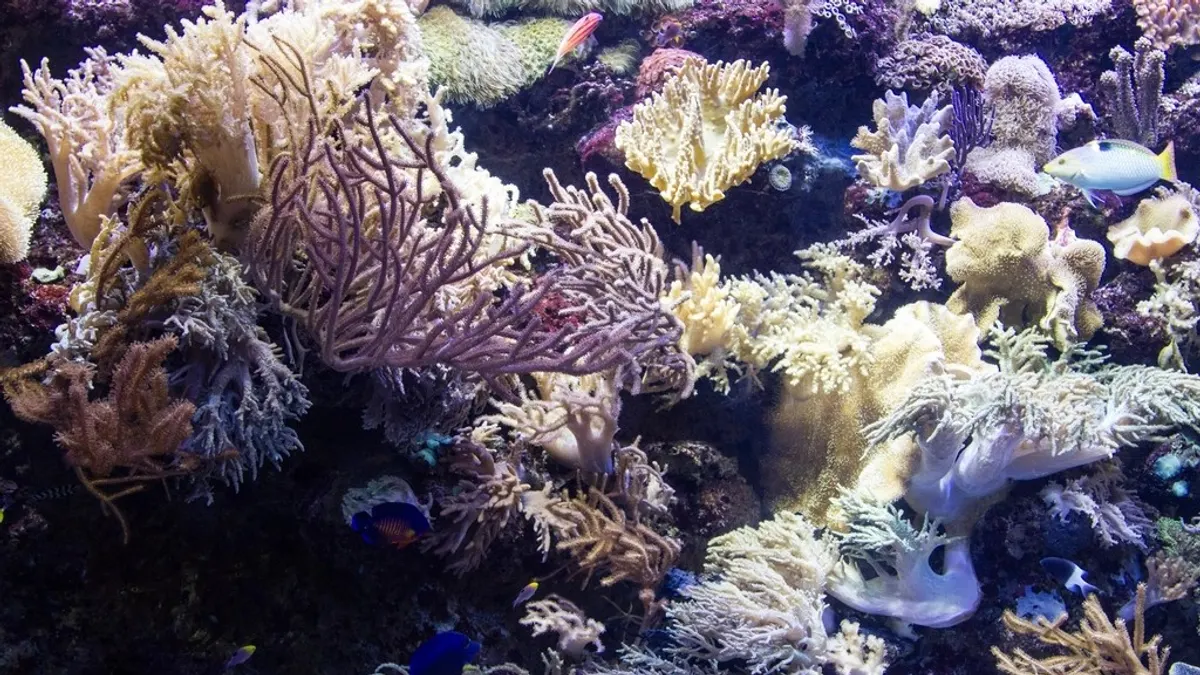
Affiliate disclosure: product links on this page go to Amazon or to the maker's own store. As an Amazon Associate we earn from qualifying purchases, at no extra cost to you; links to makers' stores earn us nothing. No retailer or brand sees our picks before they are published or has any say in them. How we choose.
For a 40 to 75 gallon reef, the JEREPET 2,100 GPH DC wavemaker is the value pick we would buy: a 12 W DC pump with a controller for pulse and steady modes, a feed mode, and a magnetic mount for glass up to half an inch, according to its listing. Reef Builders suggests one controllable wavemaker able to turn over 40 times the tank volume as the minimum for any reef, and 2,100 GPH covers that for a tank of about 50 gallons.
Water flow carries food to corals and carries waste away, and it keeps detritus suspended so the filter or skimmer can remove it. Simple circulation pumps (Hydor's Koralia, Aqueon's) are enough for freshwater and fish-only tanks.
Our top picks at a glance
1. Best value controllable wavemaker
JEREPET 2,100 GPH DC Wavemaker with ControllerMax flow: 2,100 GPH, 12 W (per the listing) · Tank rating: 50 to 100 gal (per the listing) · Control: Pulse, steady, 10 min feed mode, master and slave · Mount: Magnetic, glass up to 1/2 in
2. Best established brand
Sicce XStream 5000 Wave Pump (1,320 GPH)Max flow: 1,320 GPH, 5,000 L/h (Sicce) · Tank rating: Up to 130 gal (per the listing) · Control: None built in · Mount: Magnetic, glass up to 20 mm (Sicce)
3. Best for small tanks
Hydor Koralia Nano 425 Circulation PumpMax flow: 425 GPH, 4.5 W (Hydor; the listing says 4 W) · Tank rating: Fresh 28 to 50 gal; salt 15 to 30 gal (per the listing) · Control: None · Mount: Magnet and suction cup, glass up to 10 mm (Hydor)
4. Best budget circulation pump
Aqueon Circulation Pump, 500 GPHMax flow: 500 GPH, 3.3 W (Aqueon) · Tank rating: 20 to 40 gal (Aqueon) · Control: None · Mount: Easy-lock suction cup
5. Best crossflow
Jebao SCP-90 Crossflow WavemakerMax flow: Listing assumes 2,700 to 3,300 GPH crossflow · Tank rating: See Jebao · Control: Controller with wave modes · Mount: Inside the tank
| Pick | Max flow | Tank rating | Control | Mount | Buy |
|---|---|---|---|---|---|
| JEREPET 2,100 GPH DC Wavemaker with ControllerBest value controllable wavemaker | 2,100 GPH, 12 W (per the listing) | 50 to 100 gal (per the listing) | Pulse, steady, 10 min feed mode, master and slave | Magnetic, glass up to 1/2 in | Amazon |
| Sicce XStream 5000 Wave Pump (1,320 GPH)Best established brand | 1,320 GPH, 5,000 L/h (Sicce) | Up to 130 gal (per the listing) | None built in | Magnetic, glass up to 20 mm (Sicce) | Amazon |
| Hydor Koralia Nano 425 Circulation PumpBest for small tanks | 425 GPH, 4.5 W (Hydor; the listing says 4 W) | Fresh 28 to 50 gal; salt 15 to 30 gal (per the listing) | None | Magnet and suction cup, glass up to 10 mm (Hydor) | Amazon |
| Aqueon Circulation Pump, 500 GPHBest budget circulation pump | 500 GPH, 3.3 W (Aqueon) | 20 to 40 gal (Aqueon) | None | Easy-lock suction cup | Amazon |
| Jebao SCP-90 Crossflow WavemakerBest crossflow | Listing assumes 2,700 to 3,300 GPH crossflow | See Jebao | Controller with wave modes | Inside the tank | Amazon |
Best value controllable wavemaker
JEREPET 2,100 GPH DC Wavemaker with Controller
A small DC pump with a controller for pulse, steady and feed modes, for 50 to 100 gallon tanks.
- Max flow
- 2,100 GPH, 12 W (per the listing)
- Tank rating
- 50 to 100 gal (per the listing)
- Control
- Pulse, steady, 10 min feed mode, master and slave
- Mount
- Magnetic, glass up to 1/2 in
Pros
- DC 24 V with the driver outside the pump (per the listing)
- Foam guard keeps fish and debris out of the rear
- Master and slave control for running two pumps together
Cons
- Seller's noise and flow figures
- Less established than Sicce or EcoTech
JEREPET's wavemaker is a 2.7 by 2.7 by 2.2 inch, 12 W DC pump with a controller and digital display, rated up to 2,100 gallons per hour for 50 to 100 gallon tanks, according to its listing. Modes include pulse wave, steady stream and a 10 minute feed pause, with master and slave control for two pumps. It mounts magnetically on glass up to 12 mm (half an inch) and comes with a foam guard.
Controllability matters on a reef. Reef Builders notes that good wavemakers can be turned up and down and programmed to create different flow patterns, which avoids the steady blast that can damage soft tissue.
Best established brand
Sicce XStream 5000 Wave Pump (1,320 GPH)
An Italian-made 1,320 GPH flow pump with a 360-degree magnetic mount, for tanks up to 130 gallons.
- Max flow
- 1,320 GPH, 5,000 L/h (Sicce)
- Tank rating
- Up to 130 gal (per the listing)
- Control
- None built in
- Mount
- Magnetic, glass up to 20 mm (Sicce)
Pros
- Made in Italy by a long-standing pump maker
- 360-degree adjustable magnetic mount
- Suits fresh or salt water
Cons
- No controller: steady flow only
- Sold by a reef retailer
Sicce's XStream 5000 is a magnetic flow pump rated at 1,320 gallons per hour for tanks up to 130 gallons, made in Italy, with a 360-degree adjustable mount, according to its listing. It has no controller, so it gives steady flow. Pair two, aimed to cross, for more varied current, or use one alongside a controllable pump.
Sicce's own page lists the XStream 5000 at 5,000 liters per hour, the same 1,320 GPH, and 6 W for its 230 V European version. Its magnet holds on glass up to 20 mm (0.79 inch), the thickest rating of any pump on this page, and a rubber layer on the holder damps vibration. Inside are a stainless steel AISI 316 shaft, ceramic bearings and a self-cleaning impeller, and a spiral cover guards the cord against chewing. The same body comes in 3,500, 6,500 and 8,000 L/h sizes.
Best for small tanks
Hydor Koralia Nano 425 Circulation Pump
A 2.4 inch, 4.5 W circulation pump that adds flow to nano reefs and mid-size freshwater tanks, sold by Amazon.
- Max flow
- 425 GPH, 4.5 W (Hydor; the listing says 4 W)
- Tank rating
- Fresh 28 to 50 gal; salt 15 to 30 gal (per the listing)
- Control
- None
- Mount
- Magnet and suction cup, glass up to 10 mm (Hydor)
Pros
- Very small: 2.4 inches
- Built-in cable protector for tanks with urchins, puffers and triggers
- 2-year warranty; sold by Amazon.com
Cons
- Steady flow only
- Rated for smaller saltwater tanks than freshwater ones
Hydor's Koralia Nano 425 is a 4.5 W pump (Hydor's figure; the listing says 4 W) rated at 425 gallons per hour, ideal for freshwater tanks of 28 to 50 gallons and saltwater tanks of 15 to 30 gallons, according to its listing. It measures 2.4 inches, mounts with a vibration-absorbing magnet and suction cup on glass up to half an inch (per the listing), and includes a cable protector. Hydor also sells 240 and 565 GPH versions.
Hydor's own product page lists the Koralia Nano by liters per hour, and its 1,600 L/h size works out to 423 GPH, in line with the 425 sold in the US. For that size Hydor gives 4.5 W and recommends freshwater tanks of 100 to 180 liters (26 to 48 gallons) or marine tanks of 64 to 100 liters (17 to 26 gallons). Hydor rates the magnet for glass up to 10 mm (0.39 inch), thinner than the listing's half inch, so go by the maker's figure. Hydor also says the pump can be wired to a controller and switched at intervals of seconds, minutes or hours, which gives a steady pump some variation.
Best budget circulation pump
Aqueon Circulation Pump, 500 GPH
A 500 GPH pump for 20 to 40 gallon tanks with a ball-and-socket joint and a limited lifetime warranty.
- Max flow
- 500 GPH, 3.3 W (Aqueon)
- Tank rating
- 20 to 40 gal (Aqueon)
- Control
- None
- Mount
- Easy-lock suction cup
Pros
- Limited lifetime warranty (Aqueon)
- Ball-and-socket joint aims the flow
- Sold by Amazon.com
Cons
- Suction cup mount, not magnetic
- Steady flow only
Aqueon's 500 GPH circulation pump is recommended for 20 to 40 gallon aquariums, with a ball-and-socket joint for aiming and an easy-lock suction cup, according to Aqueon, which backs it with a limited lifetime warranty. For freshwater tanks with dead spots, or a fish-only marine tank, it is the simplest fix.
Aqueon's page adds a draw of 3.3 W and a 4.5 by 2.375 by 3.5 inch body. Its instructions say to keep the pump fully under water whenever it runs, and to form a drip loop in the cord so water cannot travel along it into the outlet.
Best crossflow
Jebao SCP-90 Crossflow Wavemaker
A long crossflow pump that spreads current across the whole tank width instead of one jet.
- Max flow
- Listing assumes 2,700 to 3,300 GPH crossflow
- Tank rating
- See Jebao
- Control
- Controller with wave modes
- Mount
- Inside the tank
Pros
- Wide, even flow without one strong jet
- Controller with wave modes
- 11 by 2 by 1.5 inch body, 25 W DC (per the listing)
Cons
- 180-day warranty (per the listing)
- Stock is scarce
Jebao's SCP-90 is a crossflow pump, an 11 by 2 by 1.5 inch bar that pushes a wide sheet of water rather than a single jet, at 25 W DC, according to its listing. The listing assumes 2,700 to 3,300 gallons per hour of crossflow for the whole tank and includes a controller with wave modes. The warranty is 180 days.
How much flow does a reef need?
Reef Builders' beginner guide suggests a minimum of 20 times the total tank volume per hour as a baseline, one controllable wavemaker capable of 40 times the volume as the minimum for any reef, and notes that some reef-crest corals battered by waves in the wild can tolerate more than 100 times. The table works those multiples out for common tanks:
| Tank | 20x per hour | 40x per hour |
|---|---|---|
| 20 gallons | 400 GPH | 800 GPH |
| 40 gallons | 800 GPH | 1,600 GPH |
| 55 gallons | 1,100 GPH | 2,200 GPH |
| 75 gallons | 1,500 GPH | 3,000 GPH |
Pump ratings are maximums with nothing in the way; rock and placement reduce real flow. Soft corals and fish-only tanks sit toward the lower end; stony corals usually want more.
What a pump's tank rating really means
A pump's tank rating is easy to turn into turnover: divide its flow by the tank's volume. Done with the ratings for pumps on this page, the numbers show why a box rating is not a reef rating:
| Pump | Rated flow | Tank size it is rated for | Turnover that implies |
|---|---|---|---|
| Aqueon Circulation Pump 500 | 500 GPH | 20 to 40 gal (Aqueon) | 12.5 to 25 times an hour |
| Hydor Koralia Nano 1600, freshwater | 1,600 L/h (423 GPH) | 100 to 180 L, or 26 to 48 gal (Hydor) | 8.9 to 16 times an hour |
| Hydor Koralia Nano 1600, marine | 1,600 L/h (423 GPH) | 64 to 100 L, or 17 to 26 gal (Hydor) | 16 to 25 times an hour |
| JEREPET 2,100 GPH wavemaker | 2,100 GPH | 50 to 100 gal (per the listing) | 21 to 42 times an hour |
Most of those land below the 40 times an hour Reef Builders suggests from one controllable wavemaker in a reef. Hydor's own ratings make the point: it puts the same pump on a much smaller tank in salt water than in fresh. For a reef, size by the 20x and 40x figures above, and read a box's upper tank size as a limit for fish-only or freshwater use.
How we chose
- Flow for the tank size, from the maker or the listing.
- Controllability. Pulse and random modes and a feed pause.
- Mounting. Magnetic mounts that hold on the glass thickness you have.
- Safety for livestock. Foam guards and cable protectors.
Placement
Reef Builders says most people put wavemakers in a rear corner facing diagonally across the length of the tank. Aim for movement everywhere, no dead spots where detritus settles, and no coral sitting in a direct, constant jet. Two pumps on opposite sides, alternating, create more natural, varied flow.
Mounting and cleaning a wavemaker
A magnetic wavemaker mount holds only on glass as thick as its maker rates it for. Sicce rates the XStream's magnet for up to 20 mm (0.79 inch), Hydor rates the Koralia Nano's for 10 mm (0.39 inch), and JEREPET's listing gives 12 mm (half an inch); Aqueon uses a locking suction cup instead. Measure your glass before ordering, and keep the intake guard or foam in place in tanks with small fish or shrimp.
Cleaning a wavemaker follows the routine in Aqueon's instructions: unplug the pump and lift it out, scrub algae off the body and impeller cage with a brush or scouring pad, wipe the impeller with a soft cloth, rinse the motor body in fresh water and refit everything. Unplug any pump before your hands go in the tank, and run it from a GFCI-protected outlet.
Freshwater tanks
Freshwater tanks rarely need a wavemaker. A circulation pump helps large tanks with dead spots, river-style tanks for hillstream fish, or planted tanks where you want to spread fertilizer and CO2. Turn the flow down or skip it for bettas and long-finned fish; see our filter guide instead.
Flow and the rest of the reef
Flow helps a protein skimmer by keeping waste suspended, and helps corals under a reef light exchange gases and feed. Keep salinity steady as water evaporates with an auto top-off.
What to skip
- One huge pump blasting corals. Spread the flow.
- Uncovered intakes in tanks with small fish or shrimp.
- Pumps with no mount rating for your glass thickness.
Frequently asked questions
Do I need a wavemaker in my reef tank?
Most reef tanks benefit from one. Reef Builders suggests one controllable wavemaker capable of turning over 40 times the tank volume per hour as the minimum for any reef.
How much flow does a reef tank need?
Reef Builders suggests at least 20 times the tank volume per hour as a baseline. For a 55 gallon tank that is 1,100 GPH; at 40 times, 2,200 GPH.
Where should I put a wavemaker?
Reef Builders says most keepers put them in a rear corner facing diagonally across the length of the tank. Avoid aiming a constant jet straight at corals.
Does a freshwater tank need a wavemaker?
Usually not. A circulation pump helps big tanks with dead spots or river-style setups, but most freshwater fish do fine with the filter's flow.
What is the difference between a powerhead and a wavemaker?
A powerhead or circulation pump gives steady flow. A wavemaker adds a controller that varies the flow in pulses or patterns, which many corals benefit from.
Sources
- Beginners: Frequently Asked Questions on Wavemakers, Reef Builders
- What Is the Purpose of a Protein Skimmer? (Robert Farnsworth), Bulk Reef Supply
- XStream (propeller pumps), Sicce
- Koralia Nano, Hydor
- Circulation Pumps For Fish Tanks and Aquariums, Aqueon
- Circulation Pumps Instructions, Aqueon (Central Aquatics)
Cover photo: S.E.A. Aquarium Singapore, CC0 1.0, via rawpixel. Cropped.
Related guides
Best Aquarium Auto Top-Off (ATO) Systems for Reef Tanks (2026)
An ATO replaces evaporated water automatically so salinity stays steady. XP Aqua's Duetto 2 has two optical sensors and two layers of overfill protection. Here are four more.
Best Protein Skimmers for Reef and Saltwater Tanks (2026)
Reef Octopus's Classic 110-INT is the skimmer we would put in a sump on a 40 to 75 gallon reef. Here are the nano options for all-in-one tanks and a DC skimmer for big systems.
Best Aquarium Chillers and Cooling Fans for Hot Tanks and Axolotls
Active Aqua's 1/10 HP chiller is the one we would buy for a 20 to 40 gallon tank that runs hot. Here is when a fan is enough, how chillers are sized, and what axolotls need.